

Will AI Replace Transcriptionists? The Truth About AI Transcription & Human Expertise
Will AI replace transcriptionists? Learn how AI transcription software is transforming workflows while human expertise remains essential in legal, medical, and enterprise documentation.
As artificial intelligence becomes more advanced, many professionals are asking:
Will AI replace transcriptionists?
The short answer is no.
AI transcription software is changing how documentation work is performed — but it is not eliminating the need for human expertise. Instead, AI-powered transcription platforms are redefining the role of transcriptionists into editors, quality specialists, and workflow experts.
The real shift is not replacement.
It is a workflow transformation.
Understanding how AI in transcription works and where human expertise remains essential is critical for professionals in legal, medical, insurance, corporate, and government documentation environments.
What AI Transcription Software Can and Cannot Do
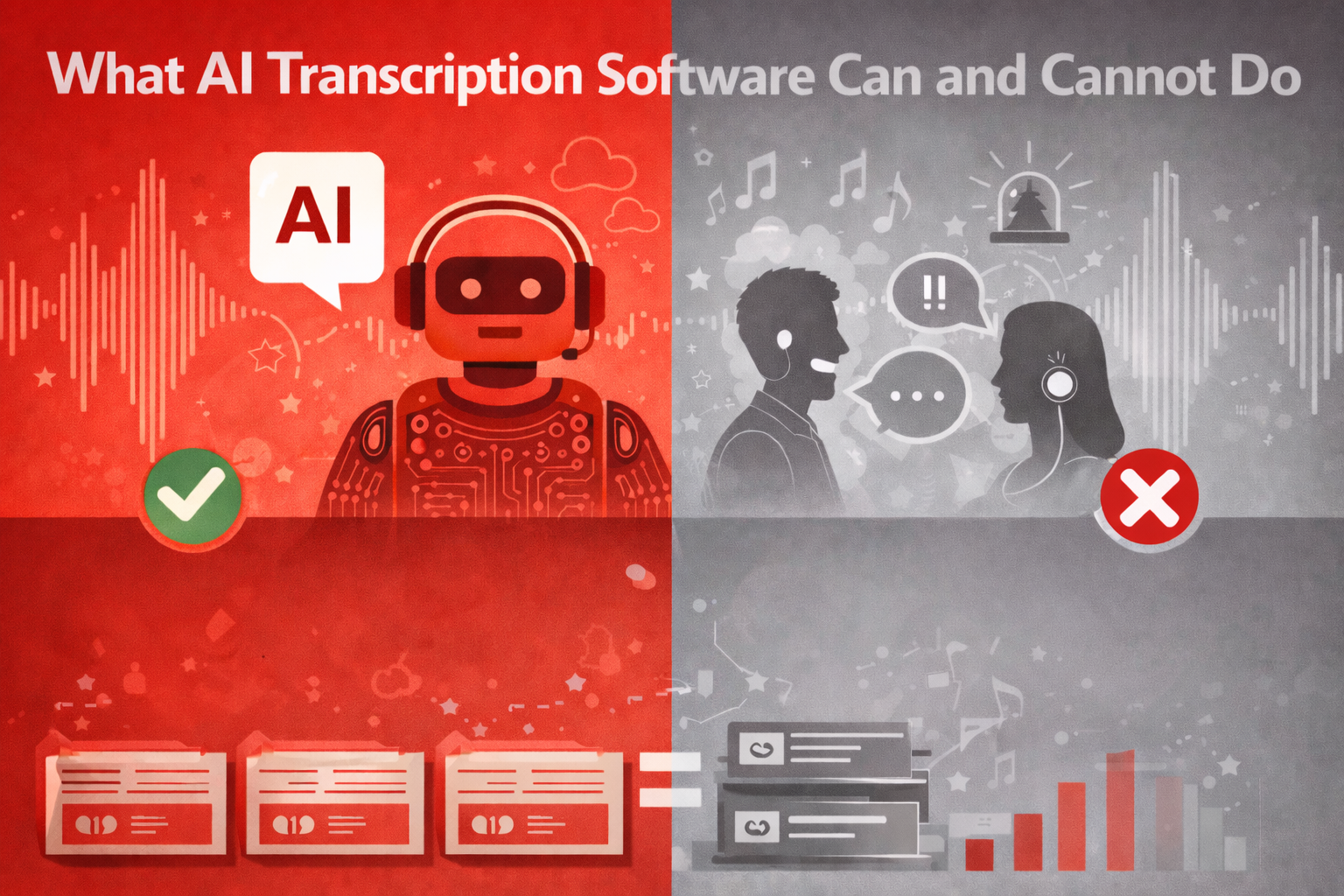
Modern AI transcription software and speech-to-text automation tools can:
Convert audio to text in minutes
Process large volumes of recordings quickly
Identify speakers automatically
Apply structured formatting rules
Support multilingual transcription
Within the Loom Analytics Platform, capabilities such as Transcribe, Align, and automation solutions accelerate first-draft transcript production significantly.
However, AI transcription tools still struggle with:
Heavy accents and regional dialects
Background noise and overlapping speakers
Contextual nuance and tone interpretation
Industry-specific terminology
Complex formatting compliance
AI generates a structured draft.
Human professionals deliver the final authoritative document.
Why AI Will Not Replace Transcriptionists
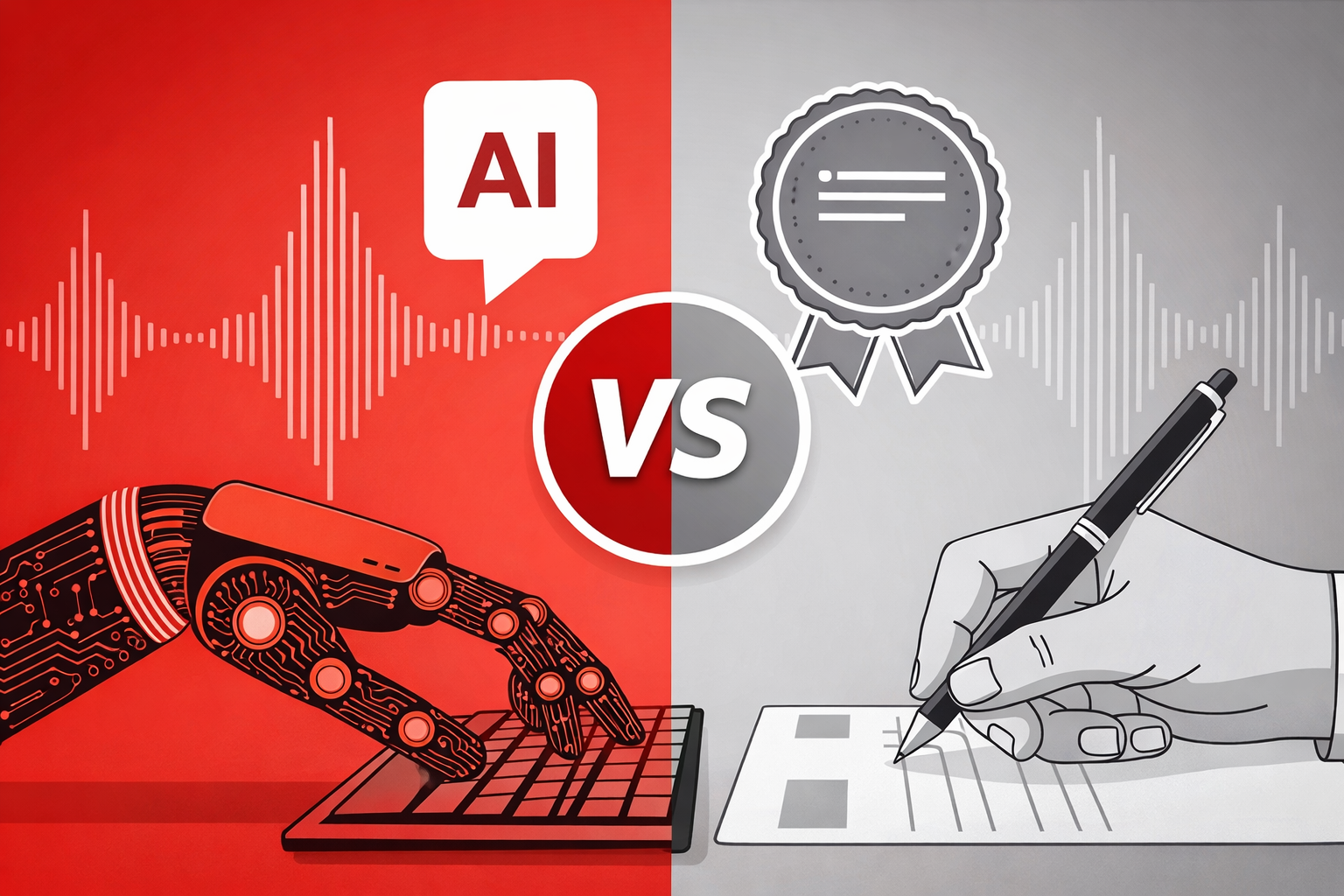
1. Accuracy Still Requires Human Review
Even advanced speech recognition systems require human oversight especially in:
Legal transcription
Medical dictation
Insurance documentation
Multi-speaker recordings
Poor-quality audio
AI transcription tools can produce fast drafts, but transcriptionists:
Verify terminology
Correct contextual errors
Ensure compliance
Deliver quality-controlled transcripts
Human-in-the-loop workflows remain essential.
2. Context and Meaning Cannot Be Fully Automated
AI processes language statistically. Humans interpret meaning.
Consider:
“Right” vs. “Write”
Sarcasm or emotional tone
Industry-specific phrasing
Regulatory terminology
In regulated industries such as legal and medical transcription, contextual accuracy is critical. This interpretive capability is where human transcription professionals remain irreplaceable.
3. Formatting, Structure, and Compliance Matter
A transcript is not simply text. It must be:
Structured correctly
Formatted according to industry standards
Organized for review and downstream use
Compliant with internal and regulatory requirements
Within the Loom Analytics Platform, features such as Profiles, Edit, and Workflow Orchestration reduce repetitive formatting work.
However, final document validation still depends on human expertise.
How AI Transcription Improves Productivity
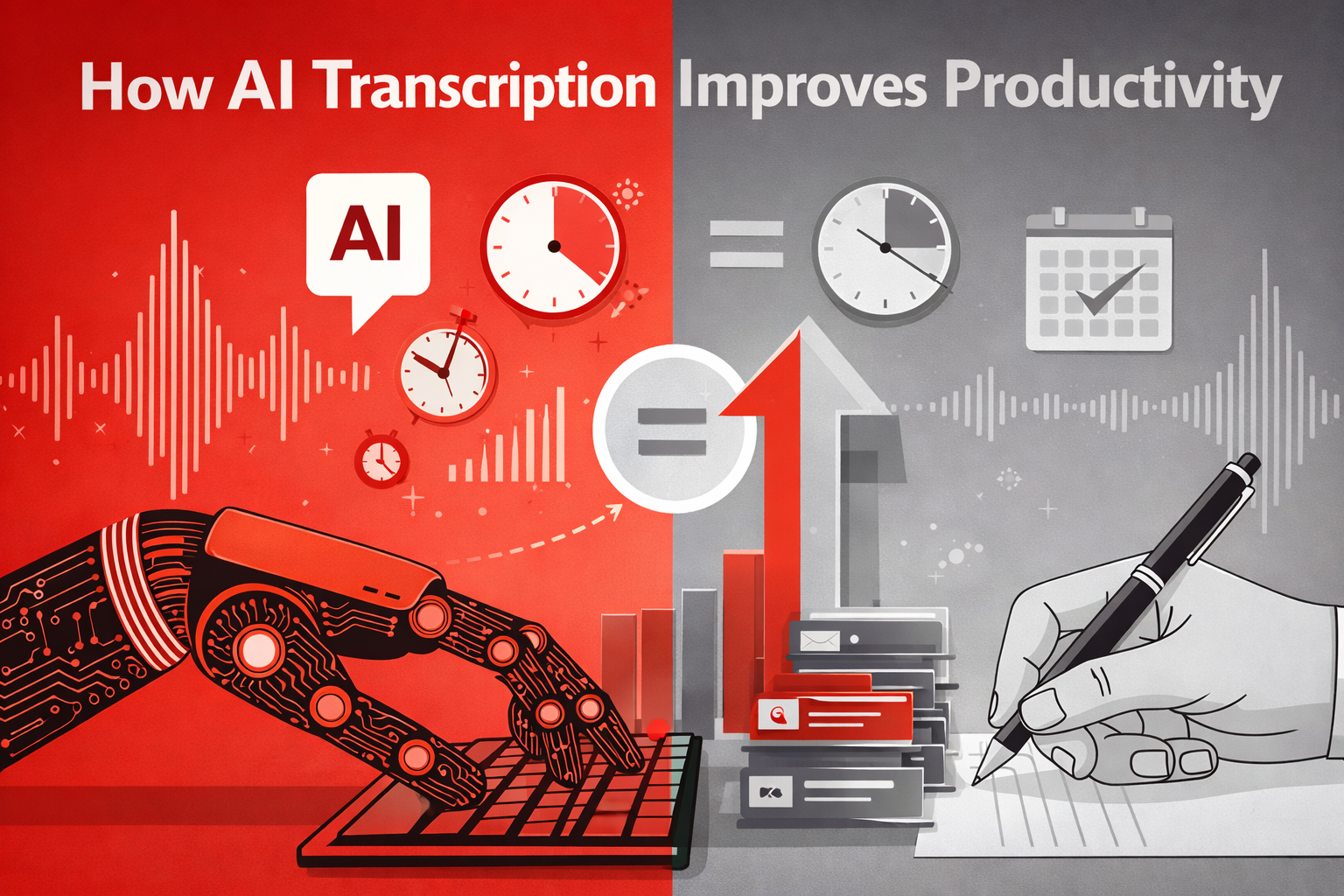
Traditionally:
Transcribing one hour of audio manually takes 3–4 hours
With AI transcription platforms:
A first draft can be generated in minutes
Editing becomes the primary task
Productivity increases significantly
This shift allows transcriptionists to:
Complete more projects
Reduce repetitive typing
Minimize file handling
Focus on higher-value quality review
AI does not remove the professional, it shifts the professional’s role upward.
How Much Faster Is AI Transcription?
Industry research shows:
Manual transcription typically takes 3–4 hours per 1 hour of audio
AI-powered speech-to-text systems can generate drafts in under 10 minutes
Studies show AI transcription accuracy ranges between 85–95%, depending on audio quality and with Loom Analytics accuracy is at 98%+ for multi-speaker audios.
Human-reviewed transcripts can reach 99%+ accuracy
This confirms:
AI dramatically increases speed.
Human oversight ensures professional-grade accuracy.
Human vs AI Transcription Comparison Table
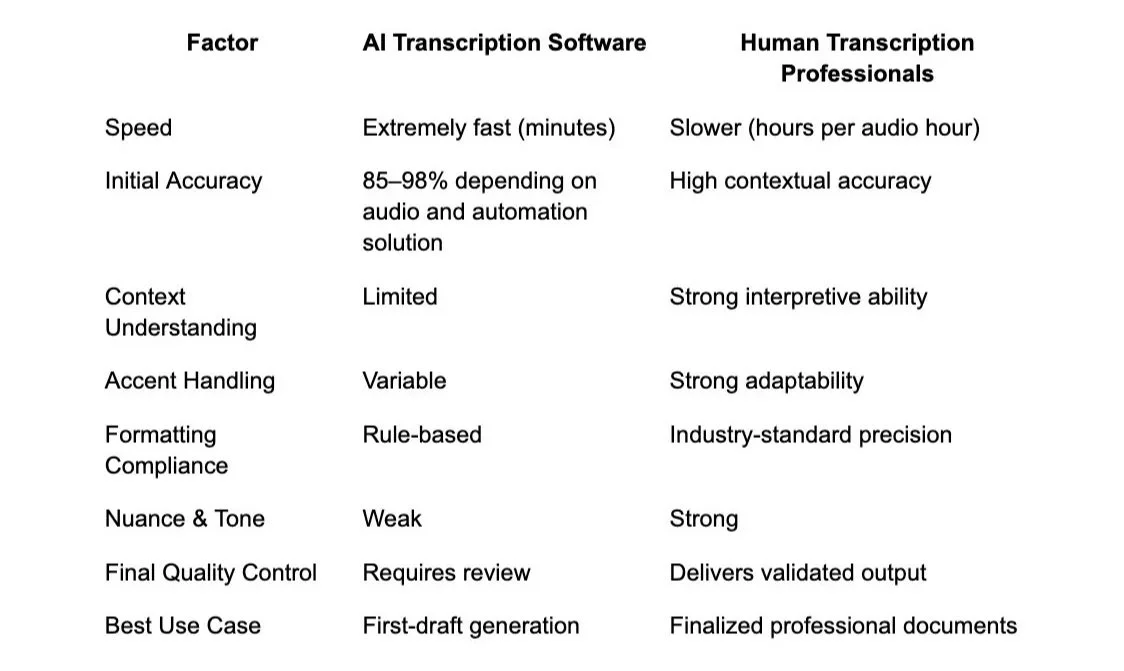
The Changing Role of the Transcriptionist in the AI Era
AI in transcription is not eliminating jobs. It is redefining them. Modern transcription professionals increasingly act as:
Editors and proofreaders
Quality assurance specialists
Formatting experts
Workflow managers
Subject-matter specialists
As transcription workflow automation becomes more common, editing and oversight skills become more valuable.
Real-World Applications of AI Transcription Workflows
AI transcription platforms like the Loom Analytics Platform are used to:
Prepare meeting minutes faster
Draft legal transcripts for review
Process medical dictations efficiently
Assist insurance teams with documentation
Support corporate documentation workflows
Capabilities across the platform include:
Transcribe for AI-powered speech-to-text
Align for synchronized transcript review
Edit for structured refinement
Redact for sensitive information protection, for certain high security workflows
End-to-end Workflow Orchestration
Instead of replacing professionals, automation reduces fragmentation and supports scalable documentation systems.
How Transcriptionists Can Stay Competitive
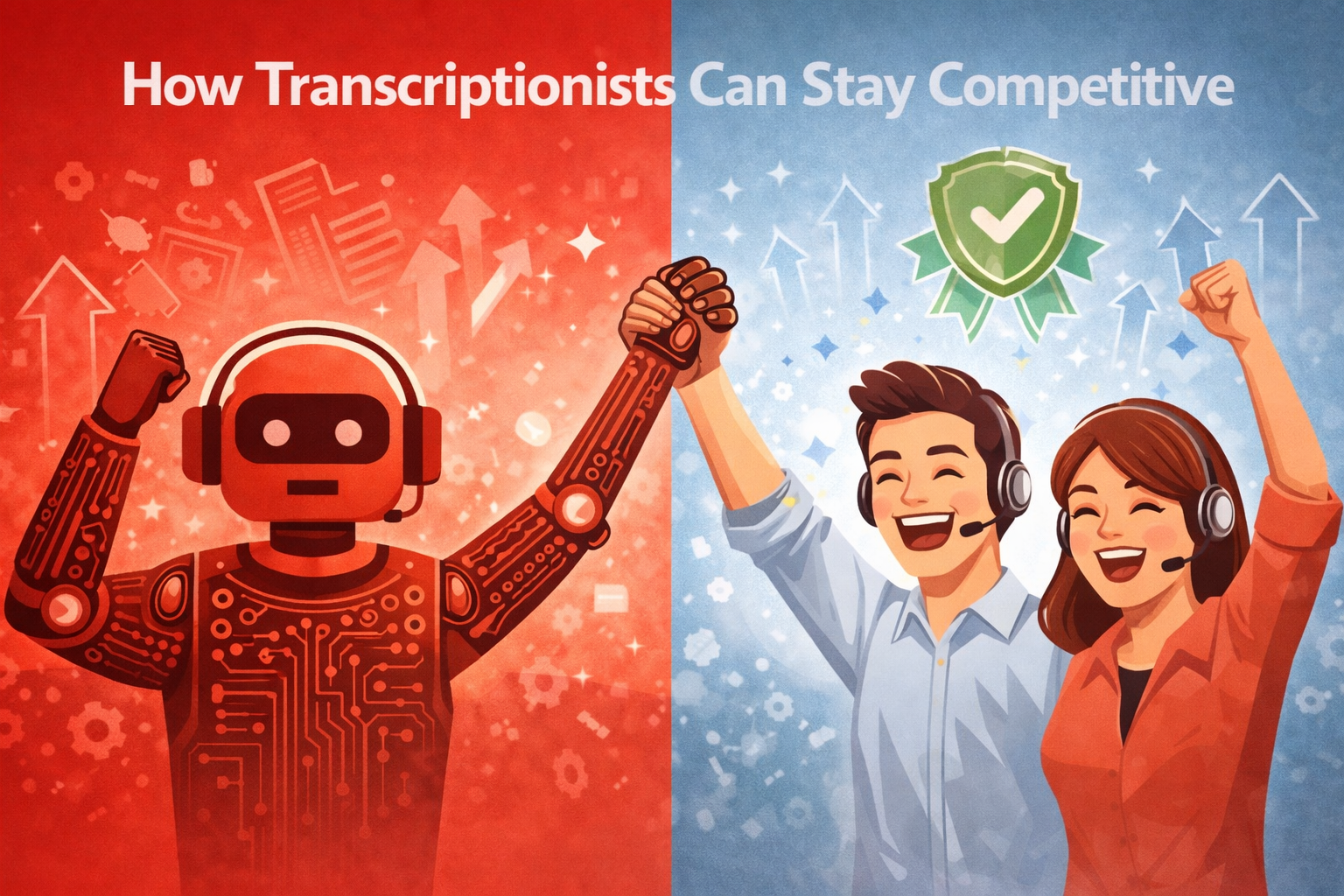
If you are asking, “Will AI replace transcription jobs?” - the better question is:
How can you adapt to AI-enhanced workflows?
Successful professionals:
Learn AI Transcription Platforms
Understanding how to use AI transcription software increases efficiency and market competitiveness.
Specialize in High-Value Niches
Legal, medical, and technical transcription require human oversight that automation cannot fully replace.
Strengthen Editing and Quality Control Skills
As AI generates drafts faster, editing becomes the core professional skill.
Improve Workflow Efficiency
Professionals who understand documentation workflow automation gain long-term advantage.
Human vs AI Transcription: The Real Future
The future of transcription is not human versus AI. It is human expertise enhanced by intelligent systems.
Technology has always reshaped industries:
Calculators did not replace accountants
Word processors did not replace writers
AI will not eliminate skilled transcriptionists
The Loom Analytics Platform is designed to support professionals through:
AI-powered Transcribe
Structured Align review
Intelligent formatting via Profiles
Secure Redact functionality
Desktop, On-Premise, Cloud, and Hybrid deployment
Full Workflow Orchestration
Automation handles speed and structure. Humans ensure accuracy, clarity, compliance, and accountability.
Conclusion: AI Is a Tool, Not a Replacement
AI transcription technology is transforming the industry, but it is not removing the need for skilled professionals.
Transcriptionists who adapt, learn new tools, and focus on high-value skills will continue to thrive in this evolving landscape.
The future of transcription is not human versus AI.
It is human expertise enhanced by intelligent tools.
Take the Next Step
If you want to see how AI transcription automation can improve speed, accuracy, and workflow efficiency, explore Loom Analytics and discover how it can support your transcription process.
Learn more about Loom Analytics and how it works - Try it for Free
( Last updated - 24 Feb, 2025 )
Frequently Asked Questions About AI and Transcription
Will AI completely replace transcriptionists?
No. AI accelerates drafting, but human professionals remain essential for review, formatting, and contextual accuracy.
Is AI transcription accurate enough for legal or medical use?
AI transcription can reach high draft accuracy, but regulated industries require human review to ensure compliance and precision.
How accurate is AI speech-to-text software?
Most modern AI systems range between 85–95% accuracy depending on audio clarity. Human-edited transcripts exceed 99%.
What is the future of transcription jobs?
Transcription roles are evolving toward editing, quality assurance, and workflow management rather than manual typing.
How does the Loom Analytics Platform support transcription professionals?
The Loom Analytics Platform provides AI-powered Transcribe, Align, Edit, Redact, and Workflow Orchestration capabilities while maintaining human oversight.
If you want to check more of our blog content click the link below:
Subscribe to our newsletter for more info: